

Local SEO services help businesses appear in front of customers who are actively searching for nearby solutions. When people look for a service, they usually want fast, local, and trustworthy results—not general websites from other cities or countries. This is where local search visibility becomes a competitive advantage.
For small businesses, showing up in map listings and localized results often determines whether customers call you or choose a competitor instead. Understanding how local visibility works is the first step toward consistent, location-based growth.
What Are Local SEO Services?
Local SEO services are a focused approach to search optimization that helps businesses appear in location-based results on Google. Unlike traditional SEO, which targets broad keywords, this method concentrates on searches with local intent. These results are influenced by proximity, relevance, and prominence rather than just website authority. For small companies, local seo services create online visibility where customers actually search—near their home, office, or current location—making them far more practical than generic rankings.
Why Local SEO Services Matter for Small Businesses
For small businesses, local search behavior is highly intent-driven. People searching for “near me” are already planning to visit, call, or book. That makes visibility more valuable than traffic volume. Compared to paid advertising, organic local results build trust through reviews, accurate information, and consistent presence.
Local seo services for small businesses focus on these trust signals, helping brands attract customers who are ready to take action. This is especially important for service providers, retailers, and local professionals competing within a limited geographic area.
How Local SEO Services Work (Complete Strategy Breakdown)
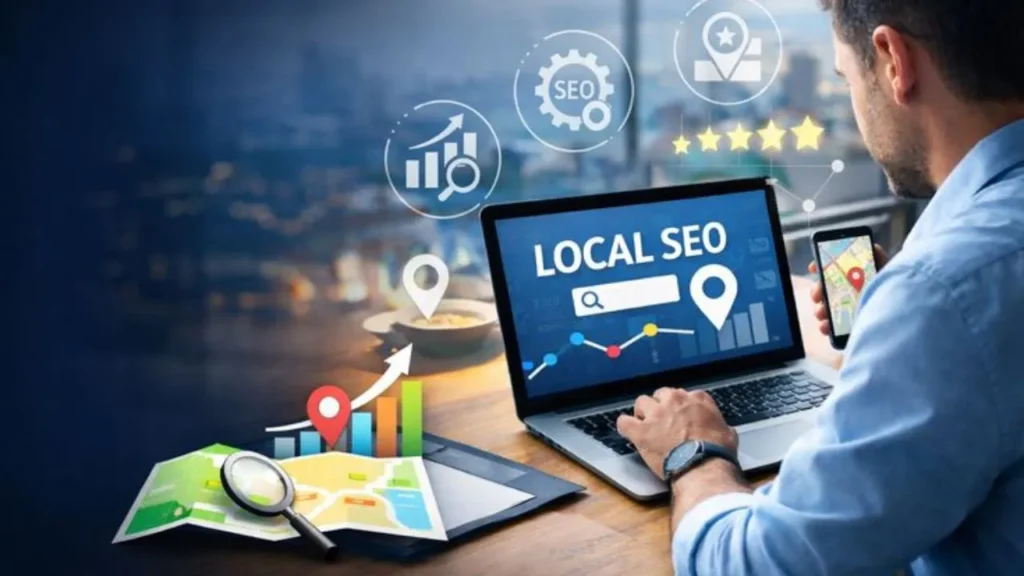
Local SEO works best when you follow a structured system instead of random tactics. Below is a complete breakdown of how the process typically runs from setup to long-term growth.
1. Build a Strong Local Foundation (Listings + Accuracy)
Start by making sure your business information is correct everywhere it appears online. That includes your name, address, phone number, hours, and service area details. Even small inconsistencies can confuse search engines and lower trust. A clean foundation helps your business reliably qualify for local results. This step also prevents issues like duplicate or conflicting listings.
2. Optimize Google Business Profile for Local Intent
Your Google Business Profile is often the strongest driver of local visibility. You optimize categories, services, photos, business description, and attributes to match what customers search for. This is where “near me” relevance is strengthened through clear signals. Regular updates, posts, and accurate Q&A also improve engagement. A well-optimized profile increases the chance of appearing in the map pack.
3. Strengthen On-Page Local Relevance (Website Signals)
Next, your website needs local signals that align with your location and services. That includes location-focused pages, clear service descriptions, and naturally placed locally relevant keywords. You also improve technical fundamentals such as speed, mobile usability, and crawlability. Internal linking helps search engines understand your priority pages. This step connects your map visibility with organic local search results.
4. Build Authority Through Citations, Reviews, and Trust Signals
Local rankings improve when your business looks credible across the web. Citations on reputable directories confirm your legitimacy and boost consistency. Reviews matter because they influence trust, clicks, and conversions—especially when they’re recent and detailed. You also strengthen trust by responding to reviews professionally. Over time, these signals help your business stand out against nearby competitors.
5. Track Performance and Improve Over Time (Sustainable Growth)
Local SEO isn’t a one-time setup—it’s an ongoing improvement loop. You track calls, direction requests, clicks, and keyword visibility to understand what’s working. Then you refine pages, add content, and adjust your profile based on real data. Competitor movement is monitored so you can stay ahead. This is how results become stable and keep growing month after month.
Where Local SEO Services Are Used (Country & City Focus)

Local search strategies don’t work the same everywhere. Country, city size, competition, and user behavior change what actually ranks.
1. Big Cities With Heavy Competition
In major cities, dozens of businesses fight for the same search terms. You need stronger positioning, better reviews, and clearer service differentiation to stand out. Search engines also expect frequent profile updates and consistent signals across the web. Small weaknesses get exposed fast because competitors are active. The goal is to earn trust and visibility in a crowded market.
2. Regional Towns and Emerging Markets
In smaller cities and growing regions, it’s easier to build early visibility if your business data is accurate and consistent. Customers still search with strong intent, but competition is often lower. That makes it a great place to establish authority before new players enter. The focus stays on clarity, credibility, and location relevance. Done right, rankings become more stable over time.
3. Country-Specific Search Behavior
Different countries show different search patterns, language preferences, and trust triggers. Some markets respond more to reviews, while others rely on directory listings or location pages. Pricing sensitivity, service expectations, and cultural habits also affect what converts. That’s why strategies must adapt instead of copying and pasting the same setup. Relevance comes from matching how people search in that region.
4. Service-Area Businesses Across Multiple Cities
If you serve customers across multiple areas (not just one shop location), the strategy needs clarity on coverage. Your service areas must match real customer demand and be reflected across listings and pages. This prevents showing up for irrelevant locations that won’t convert. It also helps build stronger city-level relevance where you actually operate. The result is cleaner traffic and better leads.
5. Multi-Location and International Brands
Businesses with multiple branches need a scalable framework that stays consistent while still feeling local. Each location requires accurate info, local content, and its own reputation signals. Central branding helps, but local customization is what earns clicks and calls. Tracking performance across locations reveals which areas need improvement. This structure protects visibility as the brand expands.
Common Local SEO Mistakes That Stop Businesses From Ranking

Many businesses don’t struggle because local search is “too hard”—they struggle because small mistakes quietly weaken trust signals. Fixing the basics first often creates faster improvements than chasing new tactics.
- Inconsistent NAP details (name, address, phone) across directories, website, and listings, which confuses search engines.
- Duplicate or unclaimed listings that split authority and send mixed signals about the “real” business profile.
- Selecting the wrong primary category makes your business appear irrelevant for the searches you actually want.
- Thin or generic service descriptions that don’t clearly match what customers type into search.
- Ignoring reviews or replying poorly reduces trust and lowers click-through rates.
- Low-quality or outdated photos make the listing look inactive or less credible than competitors.
- Keyword stuffing in the business name or content, which can trigger spam signals and ranking drops.
- No location-specific pages (or weak pages) for multi-area businesses, leading to poor relevance in city-based searches.
- Weak local citations or listing on random, low-trust directories instead of reputable, consistent sources.
- Not tracking performance (calls, clicks, directions), so you repeat the same actions without knowing what’s working.
How to Choose the Right Local SEO Services Provider
Choosing the right provider isn’t about picking the cheapest package or the flashiest promises. It’s about finding a partner who understands your market, explains the process clearly, and delivers measurable business outcomes.
1. Start With Your Goal, Not Their Package
Before comparing providers, get clear on what you actually need—more calls, more bookings, or more foot traffic. A good provider will first ask about your services, locations, and ideal customers. If they jump straight to selling a “one-size-fits-all” plan, that’s a warning sign. Clear goals also help you judge results fairly. Without a goal, you’ll pay for activity instead of impact.
2. Check If They Understand Local Intent and Your Industry
Local search works differently for dentists, restaurants, plumbers, and retail stores. A serious provider will explain how customers search in your niche and what signals matter most. They should talk about relevance, trust, and competition in a way that feels practical. If they can’t explain what makes you different locally, they won’t position you well. Industry understanding protects you from generic strategies that don’t convert.
3. Ask for Proof You Can Verify
Avoid vague claims like “we guarantee #1 rankings.” Instead, ask for real examples: case studies, before-and-after performance, and the type of businesses they’ve helped. Good proof includes measurable outcomes such as calls, direction requests, and lead quality—not just screenshots. If they hide behind “confidential results” for everything, be cautious. You want evidence that matches your business type and market.
4. Demand Transparent Reporting and Clear Communication
You should know what work is being done and why it matters. Look for providers who share simple reports that track visibility, actions, and conversions. They should also explain what changed month to month and what the next priority is. If reports feel like jargon or vanity metrics, you’ll never know the real ROI. Good communication is a trust signal, not a bonus feature.
5. Avoid Risky Shortcuts and Choose Long-Term Thinking
Some providers use spam tactics that might briefly boost rankings but later damage your listing. Watch for keyword stuffing in the business name, fake reviews, or mass directory blasts. A trustworthy provider focuses on sustainable growth through strong fundamentals and consistent improvement. They should talk about long-term trust signals, not “overnight results.” The safest choice is usually the one that sounds realistic and structured.
Why IT Digitates Is a Trusted Provider of Local SEO Services
Local seo services work best when guided by experience and ethical strategy. IT Digitates focuses on customized local approaches rather than generic templates. Their process emphasizes measurable results, proven frameworks, and sustainable rankings that align with real business goals. Instead of forcing decisions, they help businesses understand what works, why it works, and how local visibility translates into consistent customer growth.
Conclusion
Local SEO services are no longer optional for small businesses that want consistent visibility, trust, and real customers from nearby searches. When done correctly, they align your business with how people actually search—locally, urgently, and with intent to act.
Instead of chasing traffic numbers, a strong local strategy focuses on relevance, credibility, and long-term growth. If your goal is to attract nearby customers who are ready to call, visit, or book, investing in a well-planned local SEO approach is one of the most practical decisions you can make.
FAQ’s
How much do local SEO services cost?
Local SEO costs vary based on competition, location, and goals, but most small businesses invest monthly for ongoing optimization. Pricing reflects the work needed to improve visibility, trust signals, and conversions over time.
Are 46% of Google searches local?
Multiple industry studies have consistently shown that nearly half of Google searches carry local intent, especially for services and nearby needs. The exact percentage can vary by year, device, and market.
How can we do local SEO?
Local SEO starts with accurate business listings, clear service information, and location-focused website content. Over time, reviews, citations, and consistent optimization help improve local visibility.
Can ChatGPT do SEO?
ChatGPT can assist with research, content drafting, and idea generation, but it cannot replace a real SEO strategy or execution. Effective SEO still requires human expertise, data analysis, and hands-on optimization.
What is the 80/20 rule in SEO?
The 80/20 rule means a small number of actions often drive most results. In SEO, fixing core issues and focusing on high-impact pages usually delivers the biggest improvements.