
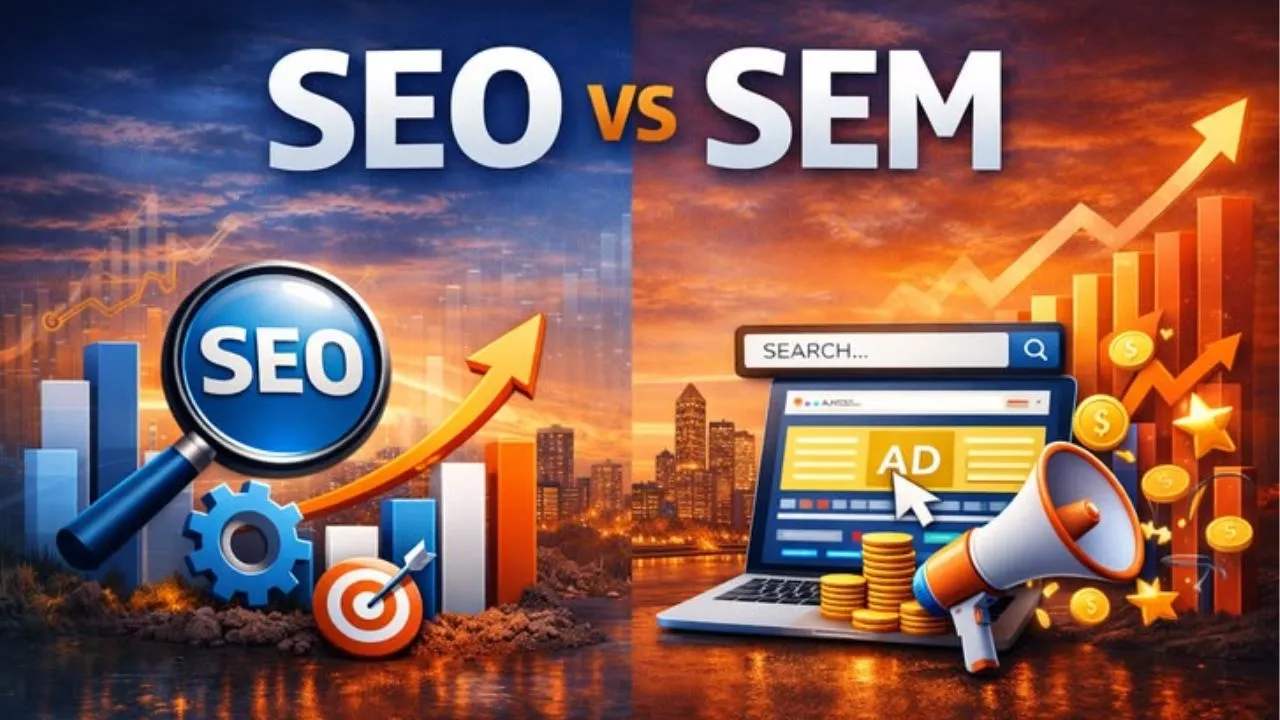
SEO vs SEM is one of the most important comparisons in digital marketing because it shapes how a business gets discovered online, attracts traffic, and turns visitors into leads or sales. Many beginners assume the topic is only about free traffic versus paid ads, but the real discussion goes much deeper than that. When you understand SEO vs SEM properly, you can make smarter decisions about budget, timing, growth goals, and long-term visibility.
This guide explains the difference between SEO vs SEM in a practical way. Instead of giving you only surface-level definitions, it shows how each strategy works, where each fits, and which option may be better for your business goals. Whether you are a beginner, a small business owner, a marketer, or part of an enterprise team, understanding SEO vs SEM in digital marketing can help you choose a strategy that matches your needs instead of following generic advice.
SEO vs SEM: What SEO Means in Search Marketing
To understand SEO vs SEM, you first need to understand what SEO actually means. SEO, or search engine optimization, is the process of improving a website so it can rank better in organic search results. It focuses on helping search engines understand your pages and helping users find useful, relevant content that matches their search intent.
SEO is not a shortcut to free traffic. It is a long-term process built on content quality, technical structure, keyword optimization, internal linking, backlinks, and overall website authority. When comparing SEO vs SEM, SEO typically represents the organic side of search marketing. It helps businesses earn visibility rather than buy it.
The main parts of SEO include on-page, off-page, and technical SEO. On-page SEO covers things like content optimization, headings, keyword placement, and user experience. Off-page SEO includes backlinks and authority signals from other websites. Technical SEO supports crawlability, site speed, mobile usability, indexing, and structured organization. Together, these ranking factors influence how well a site performs in search rankings.
SEO vs SEM: What SEM Means and How Paid Search Works
The second half of SEO vs SEM is SEM, or search engine marketing. In modern use, SEM usually refers to paid search visibility, especially through platforms like Google Ads. Instead of earning clicks from organic search results, SEM allows businesses to appear in paid placements by bidding on keywords and running ad campaigns.
SEM works through a combination of keyword bidding, ad relevance, Quality Score, budget control, audience targeting, and landing page experience. When a user searches for a term, Google may run an ad auction to decide which paid search ads appear and in what order. Your cost per click, ad rank, and conversion performance all matter.
This is why SEO vs SEM marketing is such a useful comparison. SEO builds search visibility over time, while SEM can create immediate visibility when a campaign launches. That does not mean SEM is simply about buying traffic. Strong SEM depends on strategy, targeting, copy, and conversion-focused landing pages. A weak campaign can quickly waste budget, while a strong one can generate highly qualified leads.
SEO vs SEM: What Is the Real Difference Between Organic and Paid Visibility
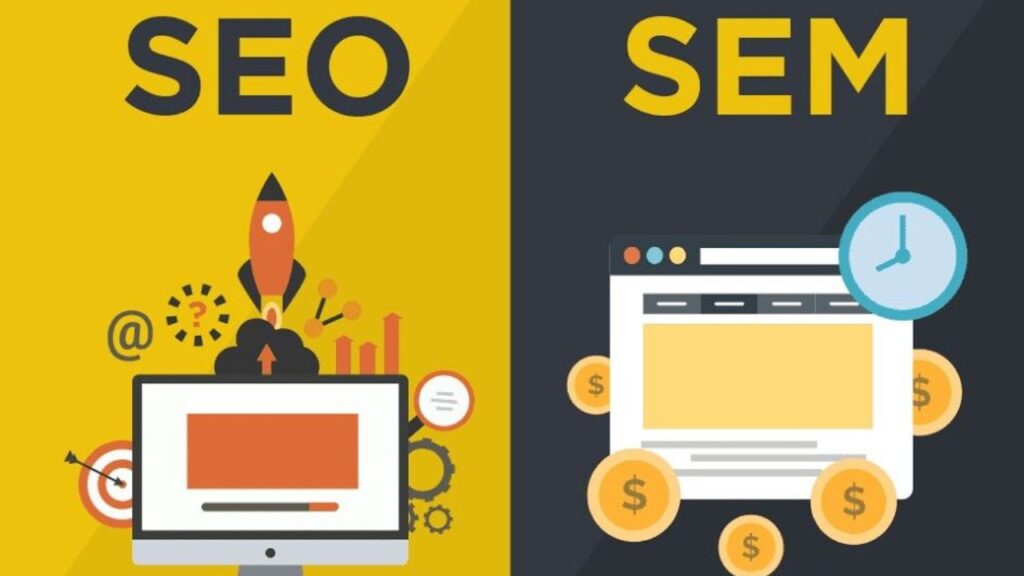
This section explains the real difference between organic and paid visibility in a simple and practical way. It helps readers understand how SEO vs SEM differ in terms of speed, cost, control, and long-term value.
| Factor | SEO (Organic Visibility) | SEM (Paid Visibility) |
|---|---|---|
| Traffic Source | SEO brings traffic from organic search results without paying for each click. | SEM brings traffic from paid search ads through platforms like Google Ads. |
| Speed of Results | SEO usually takes time to improve search rankings and build authority. | SEM can generate visibility and traffic much faster after campaign launch. |
| Cost Structure | SEO needs investment in content, optimization, and long-term strategy. | SEM requires direct ad spend, often based on cost per click. |
| Sustainability | SEO can continue driving long term traffic even after content is published. | SEM traffic often slows or stops when the ad budget ends. |
| Control and Targeting | SEO gives less immediate control because rankings depend on many ranking factors. | SEM gives stronger control over targeting, budget, bidding, and campaign timing. |
Why SEO Is Better for Long-Term Authority and Sustainable Growth
A major reason businesses invest in SEO vs SEM comparisons is to understand long-term value. SEO is often better for sustainable growth because it builds brand authority, improves search visibility, and earns trust over time. When users repeatedly find useful content from the same brand in organic search, that brand becomes more credible in their minds.
SEO supports evergreen traffic. A strong page can continue bringing visitors for months or even years if it remains relevant and well-maintained. This makes SEO attractive to brands seeking lower long-term acquisition costs and stronger online visibility. In the broader SEO vs. SEM discussion in digital marketing, SEO usually wins when patience, authority, and sustainable traffic matter more than immediate clicks.
Another reason SEO performs well over time is that it aligns closely with search intent. Good SEO content answers real questions, solves real problems, and supports the user journey. That improves click behavior, engagement, and trust. Businesses comparing SEO vs SEM, which is better, often choose SEO when their priorities are authority building, educational content, and steady growth.
Read More: Best Ecommerce SEO Services
Why SEM Works Faster for Immediate Traffic and Lead Generation
While SEO is strong for long-term growth, SEM is often the better option when speed matters. In the SEO vs SEM decision, SEM stands out because it can generate immediate visibility for a new product, local service, seasonal campaign, or urgent lead-generation goal.
If a business needs traffic now, SEM can often deliver faster than SEO. Paid campaigns can target specific search queries, user locations, devices, and audience signals. That makes SEM useful for promotions, launches, limited-time offers, and highly competitive terms where organic ranking may take too long.
Another strength in SEO vs SEM marketing is testing. SEM lets businesses test offers, ad copy, landing pages, and conversion paths more quickly. Instead of waiting for long-term ranking movement, marketers can gather data on click-through rate, conversion rate, and paid campaign performance more quickly.
How Cost, Competition, and ROI Change the Best Choice
Cost is one of the biggest factors in SEO vs SEM, but it should be understood correctly. SEO may not require direct payment per click, but it still costs money through content creation, technical work, optimization, and ongoing strategy. SEM requires direct ad spend, but it may deliver results more quickly.
So, which option is more expensive in SEO vs SEM? The answer depends on your industry, your competition, and your business model. In highly competitive paid markets, cost-per-click can be high. In highly competitive organic markets, SEO may require a major investment in content quality, technical SEO, and backlinks to compete effectively.
ROI also changes the conversation. A business with high customer value may find SEM profitable even with higher costs, especially if campaigns are well optimized. Another business may prefer SEO because it creates long-term value that compounds over time. That is why the SEO vs SEM difference should always be evaluated on the basis of return on investment, not just upfront cost.
How to Choose the Right Strategy for Different Business Goals
Choosing the right strategy depends on your business goals, available budget, and how quickly you want results. This section helps readers decide whether SEO, SEM, or a mix of both best fits their growth plan.
1. Choose SEO for Long-Term Growth and Brand Authority
SEO is the right choice when your goal is steady, long-term growth. It helps improve organic visibility, build trust, and strengthen website authority. This approach works well for businesses that want sustainable traffic instead of short-term spikes. It is especially useful for brands focused on content, credibility, and long-term search rankings.
2. Choose SEM for Fast Traffic and Immediate Leads
SEM is a better option when your business needs results quickly. It can generate paid traffic faster and help attract leads through targeted ad campaigns. This makes it useful for product launches, urgent promotions, and short-term sales goals. Businesses that need instant visibility often benefit more from SEM than from SEO at the start.
3. Choose Based on Budget, Competition, and Timeline
The right strategy also depends on how much you can invest and how competitive your market is. SEO needs time, effort, and consistent content work, while SEM needs direct ad spend. If your timeline is short, SEM may be more practical. If you can wait and build gradually, SEO may offer stronger long-term value.
4. Combine SEO and SEM for Balanced Growth
Many businesses achieve the best results by combining SEO and SEM. SEO supports long-term authority and organic traffic, while SEM helps capture quick demand and test high-intent keywords. This balanced approach gives better flexibility in competitive markets. It also helps brands grow steadily while still generating immediate opportunities.
SEO vs SEM: Where PPC and Social Media Marketing Fit in the Bigger Strategy
Many people confuse SEO vs SEM with PPC and social media marketing, so it helps to define the roles clearly. PPC usually refers to the paid advertising model where you pay per click. In that sense, PPC is often part of SEM. SEM is the broader paid search strategy, while PPC is one of the payment models commonly used within it.
Social media marketing differs because it focuses on platforms like Facebook, Instagram, LinkedIn, and TikTok rather than search engine results. Users on search engines usually show active intent, while users on social platforms may be discovering content passively. That makes search marketing and social media marketing useful for different stages of the customer journey.
This broader comparison matters in SEO vs SEM vs PPC, SEO vs SEM vs SMM, and SEM vs SEO vs Social Marketing conversations. SEO supports organic search visibility. SEM supports paid search visibility. PPC is often the tactical payment model inside SEM. SMM supports awareness, engagement, and audience building on social platforms.
SEO vs SEM: How Real Examples Make the Best Use Case Clear
Practical examples make SEO vs SEM easier to understand. Imagine a local plumbing company that needs leads this week. SEM may be the better choice because paid ads can target urgent local searches and drive immediate calls. Now imagine a software company that wants to rank for educational queries over time. SEO may be the better choice because strong content can build authority and attract qualified traffic month after month.
A local retail brand may use SEM during holiday promotions while also investing in SEO for long-term product category pages. An e-commerce store may use paid search for high-converting keywords and SEO for informational content that supports the buyer journey. A large company comparing enterprise seo vs sem may use both at scale, with SEO for sustainable authority and SEM for demand capture.
How Using Both Together Can Improve Search Performance
One of the biggest mistakes in the SEO vs SEM debate is assuming the choice must always be one or the other. In reality, many businesses get better results when they use both together. SEO can build organic authority, while SEM can deliver immediate traffic and testing insights.
For example, paid search data can reveal which keywords convert best, and those insights can improve your SEO content strategy. At the same time, strong SEO landing pages can improve user experience and support better SEM performance. When used together, SEO and SEM can increase search visibility across both organic and paid placements.
This combined strategy is especially powerful when a business wants both short-term wins and long-term growth. In SEO vs SEM marketing, integration often leads to better traffic diversification, more comprehensive keyword targeting, and stronger overall search performance.
Which Option Is Better for Beginners, Businesses, and Brands
The final answer in SEO vs SEM depends on who you are and what you need. For beginners, SEO is often a good starting point because it helps build an understanding of search intent, content structure, and organic growth. For businesses that need fast leads, SEM may be more practical. For established brands, the best strategy is often a balanced mix.
Startups may lean toward SEM early if they need rapid validation. Local businesses may mix local SEO with targeted ads. E-commerce brands often need both. Enterprise teams may invest in SEO for authority and SEM for scale and testing. That is why the difference between SEO and SEM should always be evaluated through goals, budget, and time horizon.
If your question is simply seo vs sem which is better, the honest answer is this: SEO is often better for long-term trust and sustainable visibility, while SEM is often better for immediate traffic and fast lead generation. The stronger choice depends on context, not hype.
FAQ’s
Is SEO Better Than SEM for Long-Term Results?
For long-term growth, SEO is often the stronger option because it builds organic visibility, authority, and sustainable traffic over time. SEM can support growth, but it usually depends on ongoing ad spend. In the long term, SEO tends to create more lasting assets.
Is SEM Better Than SEO for Fast Traffic?
Yes, in many cases, SEM is better for fast traffic because paid campaigns can launch quickly and target specific search intent. SEO can produce strong results, but it usually takes more time. In short-term SEO vs SEM marketing decisions, SEM often has the speed advantage.
Is SEO Really Free?
SEO is not truly free. You do not pay for every click, but you still invest in content, optimization, technical work, and strategy. This is an important part of the seo vs sem difference that many beginners misunderstand.
Can Small Businesses Use Both Together?
Yes, small businesses can use both together if they manage their budgets carefully. SEO can build local visibility over time, while SEM can support immediate leads. This works well in many local-market scenarios, including Chicago SEO vs SEM marketing-style campaigns.
What Should Beginners Start With?
Beginners should usually start with the strategy that matches their goal. If the goal is learning, authority, and long-term growth, SEO is a strong starting point. If the goal is immediate traffic and testing, SEM may be a better option. In the broader SEO vs SEM decision, beginners benefit most from understanding the purpose before choosing tactics.
Conclusion
SEO vs. SEM is not a question with a single universal winner. It is a strategic comparison between two powerful search marketing methods. SEO focuses on organic growth, trust, and sustainable visibility. SEM focuses on paid visibility, fast traffic, and controlled targeting. Understanding the difference between SEO and SEM clearly helps you avoid shallow marketing advice and make better decisions for your business.
If your priorities are authority, long-term traffic, and a strong organic presence, SEO is often the better fit. If your priority is speed, lead generation, and immediate search visibility, SEM may be the better option. And in many real business cases, the strongest answer to SEO vs SEM is not choosing one over the other, but using both with a clear plan.