

Amazon SEO is one of the most important factors behind product visibility and sales success on Amazon. With hundreds of millions of products competing across categories, simply listing an item is no longer enough. Sellers must understand how Amazon ranks products and what influences purchasing decisions if they want to appear in front of potential customers.
According to Amazon, shoppers frequently begin their product search directly on the marketplace rather than using traditional search engines. This means your product listing must be optimized to help Amazon understand what you sell while also convincing shoppers to click and buy.
Higher rankings often lead to more impressions, more clicks, and ultimately more sales. However, ranking well is not just about adding keywords. Modern optimization involves relevance, customer satisfaction, conversion performance, content quality, pricing, reviews, and overall listing effectiveness.
This guide explains proven strategies that help sellers improve visibility, attract qualified shoppers, and increase product sales. You will learn how Amazon’s search system works, which ranking factors matter most, and how to improve listings using practical methods supported by industry best practices.
What Is Amazon SEO?

Amazon SEO is the process of optimizing product listings to improve visibility in Amazon search results and increase product sales. It focuses on helping Amazon understand product relevance while improving customer engagement, click through rates, conversion rates, and overall listing performance.
The term refers to the techniques sellers use to improve product discoverability within Amazon’s marketplace. Unlike traditional website optimization, the primary goal is not website traffic. Instead, the objective is to increase product visibility and generate more purchases.
When customers search for products, Amazon analyzes listing content and performance signals to determine which products appear first. Better optimization can increase exposure to highly targeted buyers who are already looking to purchase.
Key Takeaways
| Factor | Why It Matters |
|---|---|
| Keywords | Helps Amazon understand relevance |
| Sales Velocity | Influences rankings |
| Conversion Rate | Signals product quality |
| Reviews | Build trust and authority |
| Product Content | Improves discoverability |
How Does Amazon SEO Work?
Amazon uses a sophisticated search system designed to help shoppers find products that are most likely to satisfy their needs and generate successful purchases.
Unlike informational search engines, Amazon operates within a commercial environment where buying behavior plays a major role in rankings.
Understanding Amazon’s Search Algorithm
Although Amazon does not publicly reveal every ranking factor, industry research and seller experience consistently show three major areas of importance.
1. Relevance
Amazon first determines whether a product matches a shopper’s search query.
Relevance signals include:
- Product titles
- Bullet points
- Product descriptions
- Backend search terms
- Category selection
- Product attributes
The better Amazon understands your listing, the more likely it is to appear for relevant searches.
2. Performance
After relevance, Amazon evaluates performance metrics.
Important performance indicators include:
- Click through rate
- Conversion rate
- Sales history
- Revenue generated
- Customer engagement
Products that consistently convert visitors into buyers often gain stronger visibility.
3. Customer Satisfaction
Amazon places significant emphasis on customer experience.
Key indicators include:
- Product ratings
- Customer reviews
- Return rates
- Order defect rates
- Seller performance metrics
Products that satisfy customers are more likely to maintain strong rankings over time.
Review Insight:
“I never realized how much Amazon’s search algorithm depends on customer behavior until I learned about relevance, conversion rates, and sales performance. Understanding these factors helped me improve my product listings and increase visibility for several products. This information made Amazon SEO much easier to understand.“
Why Amazon SEO Differs From Google SEO
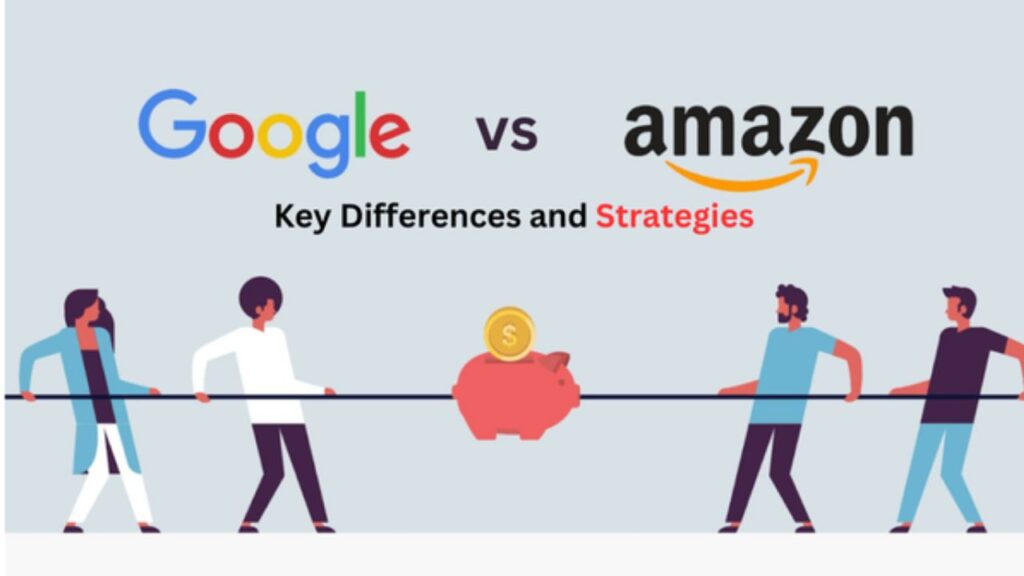
Many beginners assume Amazon and Google operate similarly. In reality, their goals are very different. Google aims to provide the most useful information. Amazon aims to generate successful purchases.
Quick Comparison
| Amazon SEO | Google SEO |
|---|---|
| Product sales | Website traffic |
| Conversion signals | Backlinks |
| Revenue focused | Information focused |
Google rewards authority and informational value. Amazon rewards listings that generate sales while delivering positive customer experiences. This difference explains why conversion optimization is often as important as keyword targeting.
Read More About: Small Business SEO Services
The Most Important Amazon SEO Ranking Factors
Understanding ranking factors allows sellers to focus on activities that have the greatest impact on visibility and revenue.
1. Product Title Optimization
The product title is one of the most influential listing elements.
An effective title should:
- Clearly describe the product
- Include important search terms naturally
- Highlight essential features
- Remain easy to read
Avoid excessive repetition or unnatural phrasing.
A strong title helps both Amazon and shoppers understand exactly what is being offered.
Example
Poor title:
Wireless Earbuds Bluetooth Earbuds Wireless Headphones Earbuds
Improved title:
Bluetooth Wireless Earbuds with Noise Reduction and Charging Case
The second version provides clarity while maintaining relevance.
2. Keyword Relevant Bullet Points
Bullet points communicate key product benefits quickly.
Effective bullet points should focus on:
- Features
- Benefits
- Use cases
- Product specifications
- Customer concerns
Well written bullets improve both relevance and conversion potential. Instead of listing technical specifications only, explain how those features help the customer.
For example:
Instead of:
Battery Capacity: 5000mAh
Use:
5000mAh battery provides all day performance for travel, work, and daily use.
This approach helps shoppers make informed decisions.
3. High Quality Product Images
Images are among the strongest conversion drivers on Amazon. According to Amazon guidelines, high quality visuals help customers evaluate products more effectively.
Strong image sets often include:
- Main product image
- Lifestyle images
- Feature callouts
- Size comparison images
- Product usage demonstrations
Images influence click through rates and conversions, both of which affect ranking performance.
Many sellers underestimate how much image quality contributes to sales growth.
4. Product Descriptions and A+ Content
A detailed product description helps reinforce product value. Brand registered sellers can also use A+ Content to enhance listings.
Benefits include:
- Improved visual presentation
- Better customer understanding
- Increased trust
- Higher conversion potential
A+ Content allows brands to tell a compelling product story while addressing common buyer questions.
According to Amazon, enhanced content can improve customer engagement and help shoppers make purchasing decisions with greater confidence.
5. Backend Search Terms
Backend keywords are hidden search terms entered within Amazon Seller Central. Customers cannot see them, but Amazon may use them to understand listing relevance.
Best practices include:
- Avoid repeating visible keywords
- Include alternate spellings
- Include relevant variations
- Avoid irrelevant phrases
Backend search terms help expand discoverability without cluttering visible content.
6. Customer Reviews and Ratings
Reviews serve as social proof. Shoppers often compare ratings before making purchasing decisions.
Higher ratings can improve:
- Customer trust
- Conversion rates
- Long term performance
Amazon’s review policies should always be followed.
Attempting to manipulate reviews can result in penalties or account restrictions.
Instead, focus on delivering excellent products and customer experiences that naturally encourage positive feedback.
7. Sales Velocity and Conversion Rate
Sales velocity refers to the speed at which products generate sales. Conversion rate measures the percentage of visitors who purchase after viewing a listing. These metrics often work together.
Products that consistently generate sales signal strong customer demand. As a result, Amazon may reward those products with increased visibility.
Expert Insight
Many sellers spend too much time trying to insert additional keywords while ignoring conversion optimization.
A listing with moderate keyword targeting but strong conversion performance will often outperform a listing with excessive keyword usage and weak customer engagement.
The reason is simple.
Amazon earns revenue when products sell. Therefore, products that convert effectively often receive greater visibility than products that simply contain more keywords.
8. Pricing Competitiveness
Price remains an important purchasing factor. Customers frequently compare multiple products before buying.
Competitive pricing can improve:
- Click through rate
- Conversion rate
- Overall sales volume
This does not always mean being the cheapest option. Instead, focus on delivering strong value relative to competitors.
When pricing aligns with product quality, reviews, and presentation, shoppers are more likely to complete a purchase.
Amazon SEO Optimization Strategies That Actually Work

Many sellers focus only on keywords and overlook the factors that directly influence sales performance. Successful optimization requires a balance between discoverability and customer experience.
The following strategies consistently help improve product visibility while increasing the likelihood of conversion.
1. Perform Keyword Research Before Listing Creation
Keyword research should be completed before writing titles, bullet points, descriptions, or backend search terms.
The goal is to understand how shoppers search for products rather than how sellers describe them.
Useful sources include:
- Amazon search suggestions
- Helium 10
- Jungle Scout
- MerchantWords
- Competitor listings
- Customer reviews
Research often reveals buyer language, common questions, and search patterns that can help improve listing relevance.
Look for keywords that accurately match your product and buyer intent. Avoid targeting unrelated search terms simply because they have high search volume. Relevant traffic converts better than broad traffic.
2. Place Primary Keywords Naturally
Keywords should appear naturally within listing content. They should help clarify what the product is without reducing readability.
Good placement areas include:
- Product title
- Bullet points
- Product description
- A+ Content
- Backend search terms
The objective is to create content that serves both Amazon’s search system and real customers. Listings that read naturally often perform better because shoppers can quickly understand the product’s value.
3. Optimize Listings for Human Buyers First
Many sellers write listings as if they are communicating with algorithms. In reality, every listing exists to persuade human buyers.
Ask these questions:
- Does the title clearly explain the product?
- Are the benefits easy to understand?
- Do images answer common questions?
- Is the product value obvious?
- Does the content build trust?
When customers understand a product and feel confident in its value, conversion rates typically improve.
Higher conversions often support stronger long term ranking performance.
4. Improve Click Through Rate With Better Images
A product image is usually the first thing shoppers notice. Strong visuals can increase clicks even when competing against similar products.
Effective image strategies include:
- Professional photography
- White background main image
- Lifestyle photography
- Product demonstrations
- Feature callouts
- Comparison graphics
Images should answer questions before shoppers ask them.
The more information customers can understand visually, the more likely they are to click and explore the listing.
5. Use A+ Content to Increase Conversions
A+ Content gives brands additional opportunities to communicate value.
Well designed modules can:
- Explain product benefits
- Compare products
- Highlight brand credibility
- Reduce customer confusion
- Improve purchase confidence
While A+ Content alone may not guarantee higher rankings, it can improve conversion rates, which often contributes to stronger performance over time.
6. Drive External Traffic to Amazon Listings
Amazon increasingly rewards products that generate demand from multiple channels.
External traffic sources may include:
- Blogs
- Email marketing
- Social media
- Influencer partnerships
- YouTube reviews
- Press coverage
External traffic can help increase visibility, generate sales, and strengthen product performance metrics.
A diversified traffic strategy reduces dependence on Amazon search alone.
7. Continuously Test and Improve Listings
Optimization should never be viewed as a one time task.
- Customer behavior changes.
- Competitors improve.
- Market conditions evolve.
Successful sellers regularly evaluate:
- Images
- Titles
- Bullet points
- Pricing
- Product positioning
- Conversion performance
Continuous improvement often creates long term competitive advantages.
Review Insight:
“These Amazon SEO optimization strategies helped me focus on what actually drives results. Instead of constantly changing keywords, I improved my product images, bullet points, and overall customer experience. Within a few weeks, I noticed higher click through rates and better sales performance.”
Best Amazon SEO Tool Options for Sellers
The right software can simplify keyword research, listing optimization, and competitive analysis.
Tool Comparison
| Amazon SEO Tool | Best For | Key Feature |
|---|---|---|
| Helium 10 | Keyword research | Listing optimization |
| Jungle Scout | Product research | Opportunity finder |
| Data Dive | Advanced sellers | Deep keyword analysis |
| MerchantWords | Keyword discovery | Search term database |
How to Choose the Right Amazon SEO Tool
The best choice depends on your business goals.
- Helium 10: Suitable for sellers who want an all in one platform for keyword research, listing optimization, and market analysis.
- Jungle Scout: Useful for product discovery and market validation.
- Data Dive: Popular among experienced sellers seeking advanced keyword insights and listing analysis.
- MerchantWords: Designed primarily for search term discovery and keyword expansion.
Before selecting any platform, evaluate:
- Budget
- Business size
- Product catalog
- Reporting needs
- Optimization goals
No tool replaces strategy, but the right platform can improve decision making.
Common Amazon SEO Mistakes That Hurt Rankings
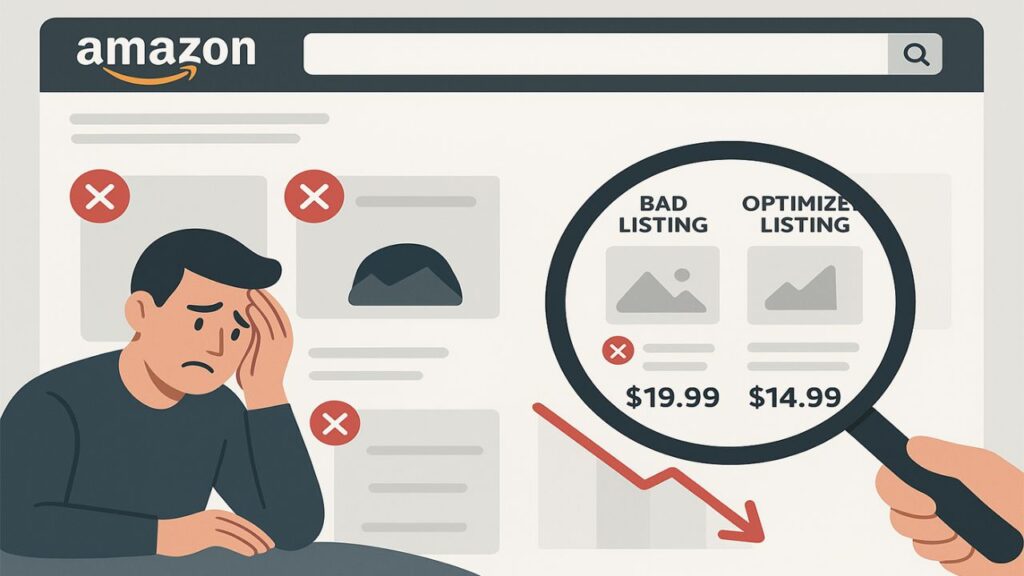
Many listings struggle not because of competition but because of avoidable mistakes.
1. Keyword Stuffing Titles
Overloading titles with repetitive keywords creates a poor customer experience.
Problems include:
- Reduced readability
- Lower trust
- Potential compliance concerns
Titles should remain informative and customer friendly.
2. Ignoring Backend Keywords
Many sellers leave backend search fields incomplete. This limits discoverability opportunities. Relevant backend terms help Amazon better understand product variations and search intent.
3. Poor Product Images
Low quality images often reduce both clicks and conversions.
Common issues include:
- Blurry photos
- Inadequate lighting
- Missing feature demonstrations
- Lack of lifestyle imagery
Visual presentation directly influences purchasing decisions.
4. Neglecting Customer Reviews
Customer feedback provides valuable insight into product performance.
Ignoring reviews can result in:
- Missed improvement opportunities
- Lower trust
- Reduced competitiveness
Monitor reviews regularly and use feedback to improve products and listings.
5. Focusing on Rankings Instead of Conversions
Some sellers become obsessed with ranking positions. However, visibility without sales creates limited business value.
The most successful sellers focus on:
- Customer experience
- Conversion optimization
- Product quality
- Long term growth
Sales remain the ultimate goal.
6. Not Updating Listings Regularly
Product listings should evolve with customer behavior and market trends.
Regular updates may include:
- Improved images
- New keywords
- Better descriptions
- Updated pricing
- Enhanced A+ Content
Ongoing optimization helps maintain competitiveness.
Should You Hire an Amazon SEO Agency or Consultant?
Many businesses eventually reach a point where professional assistance becomes valuable. The right choice depends on goals, resources, and growth stage.
When an Amazon SEO Agency Makes Sense
An agency may be beneficial when:
- Managing multiple products
- Entering competitive categories
- Scaling advertising campaigns
- Expanding internationally
Agencies often provide broader expertise and dedicated resources.
Benefits of Working With an Amazon SEO Consultant
Consultants can offer strategic guidance without the cost of a full service agency.
Benefits may include:
- Personalized recommendations
- Listing audits
- Keyword strategy
- Conversion optimization guidance
This option often works well for growing brands seeking expert direction.
What an Amazon SEO Specialist Typically Does
A specialist usually focuses on optimization activities such as:
- Keyword research
- Listing creation
- Competitor analysis
- Performance monitoring
- Conversion improvement
Specialists often provide hands on execution support.
Comparison Table
| Option | Best For |
|---|---|
| DIY SEO | New sellers |
| Consultant | Growing brands |
| Agency | Competitive markets |
Is Amazon SEO Certification Worth It?

Certification programs can provide valuable education, but they are not a guarantee of success. Practical experience remains essential.
Who Should Consider Amazon SEO Certification?
Certification may benefit:
- New sellers
- Marketing professionals
- E commerce managers
- Virtual assistants
- Agency teams
It can help build foundational knowledge and confidence.
Skills You Can Learn
Many programs teach:
- Keyword research
- Listing optimization
- Marketplace strategy
- Product positioning
- Performance analysis
These skills can improve decision making and campaign effectiveness.
Limitations of Certifications
Certification alone does not replace real world experience. Marketplace conditions change frequently. Successful sellers continue learning through testing, analysis, and practical implementation. The most valuable education combines structured learning with hands on execution.
Amazon SEO Checklist for Higher Rankings
Before publishing or updating any product listing, review the following checklist to ensure every major optimization area has been addressed.
Listing Optimization Checklist
- Keyword research completed
- Optimized title created
- Bullet points clearly explain benefits
- High quality images uploaded
- Backend search terms added
- Product description optimized
- A+ Content enabled where available
- Reviews monitored regularly
- Conversion rate tracked
- Pricing evaluated against competitors
- Inventory levels maintained
- External traffic strategy implemented
- Listing updated based on customer feedback
- Competitor analysis reviewed
- Performance metrics monitored
Successful sellers often revisit this checklist regularly because optimization is an ongoing process rather than a one time project.
FAQ’s
How Much Does Amazon SEO Cost?
The cost depends on the level of support required. Businesses managing optimization internally may only pay for software subscriptions and training resources.
Can I Make $1000 a Month Selling on Amazon?
Yes. Many sellers generate more than $1000 per month through Amazon.
How Long Does Amazon SEO Take to Show Results?
Results vary based on competition, product category, and listing quality. Some improvements may become visible within a few weeks.
Is Amazon SEO Different From Google SEO?
Yes. Google primarily focuses on delivering useful information. Amazon focuses on generating successful purchases. Google evaluates factors such as content quality, authority, and backlinks.
Can I Do Amazon SEO Without an Agency?
Yes. Many sellers manage optimization independently. Learning the fundamentals, using reliable tools, and consistently improving listings can produce strong results.
Final Thoughts
Amazon SEO remains one of the most important factors influencing product visibility and long term sales success on Amazon. While keywords still play an important role, successful optimization goes far beyond keyword placement.
The highest performing listings combine relevance, strong product content, customer trust, competitive pricing, high quality visuals, and conversion focused strategies. Sellers who focus only on rankings often struggle to achieve sustainable growth.
Those who focus on customer experience, conversion optimization, and continuous improvement typically achieve stronger results over time. The most successful brands understand that optimization is not a one time task.
Markets evolve. Customer behavior changes. Competitors improve. Winning sellers consistently analyze performance, test new strategies, and refine their listings based on real data.
Whether you are launching your first product or managing an established catalog, the principles covered in this guide can help improve visibility, increase conversions, and drive sustainable growth.
Ready to Grow Your Amazon Business?
If you want expert guidance backed by proven strategies, the team at Itdigitate can help.
Our specialists work with businesses to improve product visibility, optimize listings, identify growth opportunities, and increase marketplace performance through data driven strategies.
Whether you need help with listing optimization, keyword research, conversion improvement, competitive analysis, or a complete marketplace growth strategy, our team can provide the expertise needed to move your business forward.
Contact Itdigitate today and discover how a professionally optimized Amazon strategy can help increase visibility, improve conversions, and accelerate product sales.